Small Paintings for Small Spaces

small-scaled art for saleFeaturing a Line of Small Oil Paintings

I am pleased to bring your attention to a line of small gallery-quality oil paintings. These little paintings are available in a diverse variety of themes and are small enough to fit in tight spaces.

When it comes to art, size doesn’t always matter. Small paintings can have a big impact, especially in compact living spaces. They can be proudly displayed anywhere space is cramped, like hallways, stairways, bookshelves, or even ledges. Dress up confined areas such as dorm rooms, offices, and work cubicles. Or even on the walls of your tiny house, RV, or houseboat. These small 6×6-inch or 6×8-inch works of art on premium gallery-wrapped canvas are designed to fit anywhere there is a limited amount of wall space you want to decorate or spruce up.

Small Oil Paintings on Canvas

Flowers

Click or tap on the thumbnail link for more information and to purchase.

small paintings
Red and White Cosmos (2023)
6″ w x 8″ h
small calla lily painting
White Calla Lilies on Blue (2023)
6″ w x 8″ h
small flowers paintings
White Poppies in a Vase (2022)
6″ w x 8″ h
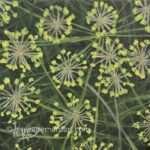
small canvas artwork
Dill Flowers Close-up (2021)
6″ w x 6″ h
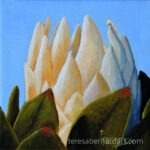
small-scale fine art
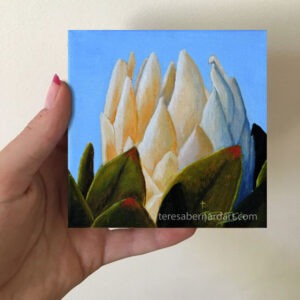
King Protea Flower (2020)
6″ w x 6″ h
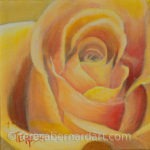
little-sized creative works
Yellow Rose Blossom (2018)
6″ w x 6″ h
Landscapes

Click or tap on the thumbnail link for more information and to purchase.

small paintings of autumn
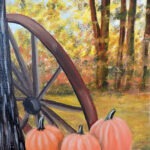
Fall Pumpkins and a Wagon Wheel (2022)
6″ w x 8″ h
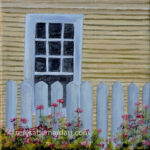
small canvas art
The Garden Cottage (2020)
6″ w x 6″ h
Marine
small marine paintings
Kokomo Beach
(2022)
6″ w x 8″ h
lighthouse canvas art
Rubjerg Knude Lighthouse (2022)
6″ w x 8″ h
smaller painted compositions
Sunset in The Tropics (2020)
6″ w x 6″ h
People

Click or tap on the thumbnail link for more information and to purchase.

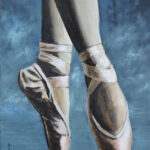
small paintings for sale
Ballerina Feet En Pointe (2022)
6″ w x 8″ h
Space Art

Click or tap on the thumbnail link for more information and to purchase.

small space art paintings
Asteroid Strike
(2021)
6″ w x 6″ h
small paintings of space for sale
In a Faraway Galaxy (2021) 
6″ w x 6″ h
Still Life

Click or tap on the thumbnail link for more information and to purchase.

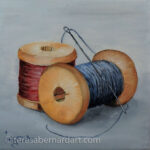
canvas art for tight spaces
Great-Grandma’s Sewing Thread #1 (2021) 6″ w x 6″ h
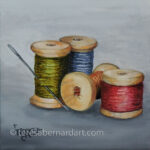
artwork for small spaces
Great-Grandma’s Sewing Thread #2 (2021) 6″ w x 6″ h
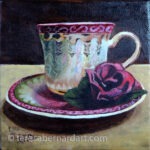
small art for limited spaces
Great-Grandma’s Teacup (2020)
6″ w x 6″ h
Wildlife

Click or tap on the thumbnail link for more information and to purchase.

small insect art oil paintings
The Monarch Butterfly (2019)
6″ w x 6″ h
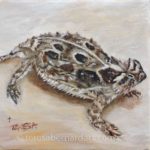
small-scale horny toad painting
Texas Horned Lizard (2018)
6″ w x 6″ h
little painted pictures
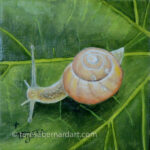
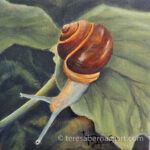
Snail #1: Last Leaf
(2021)
6″ w x 6″ h
common snail art
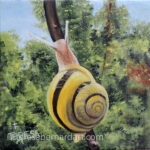
Snail #2: Left Hanging (2021)
6″ w x 6″ h
small-scale stretched canvas art
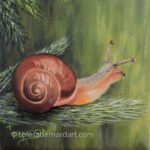
Snail #3: Out on a Limb (2021)
6″ w x 6″ h
shop for small art paintings
Snail #4: Turning Over a New Leaf (2021)
6″ w x 6″ h
small artwork paintings
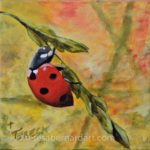
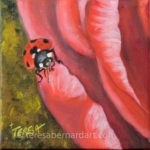
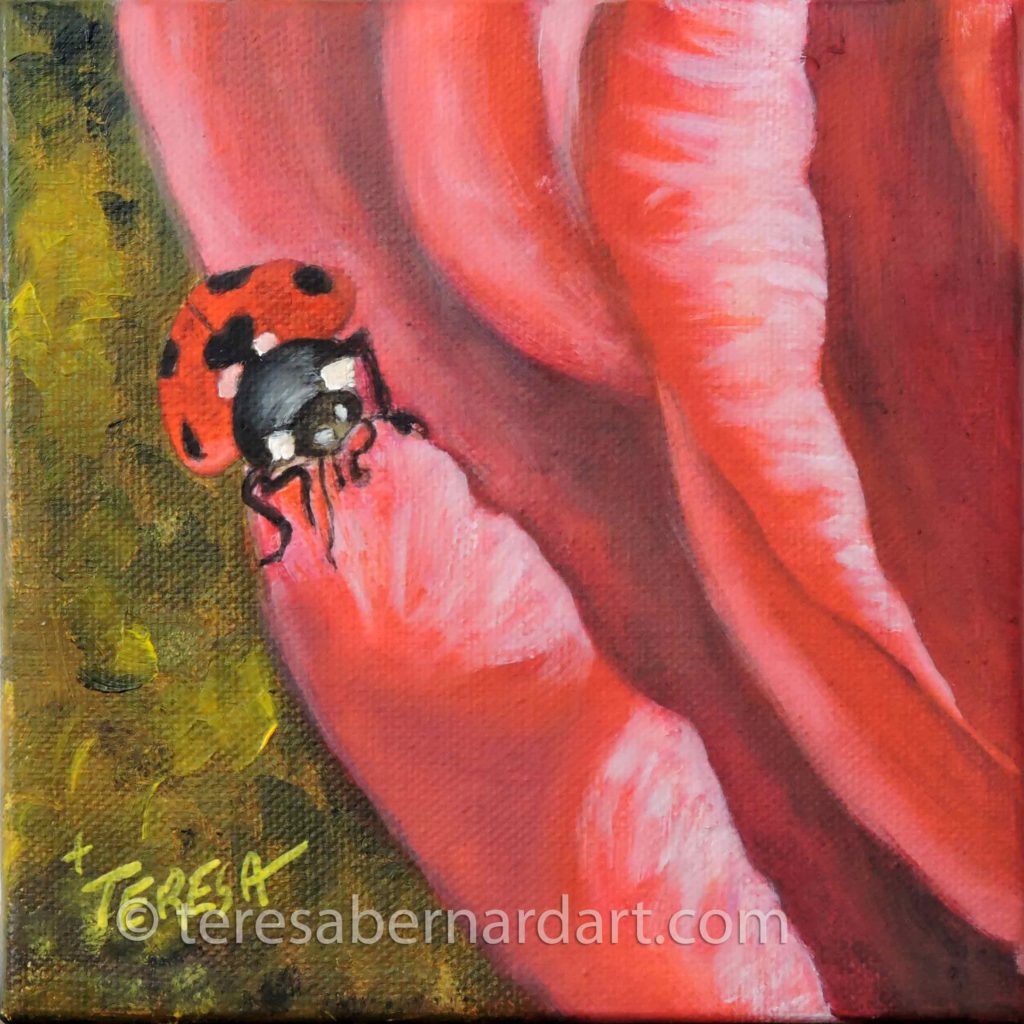
Ladybug #1 – Hanging on Tight (2016)
6″ w x 6″ h
little canvas art
Ladybug #2 – Almost Perfect Camouflage (2016) 6″ w x 6″ h

When Size Matters in Canvas Art

Discover how scale shapes the experience of original oil paintings by Teresa Bernard. From commanding extra‑large works to intimate small pieces, each size category offers its own presence, purpose, and visual impact.

Extra-Large Paintings — Unveiling Hidden Treasures

Large Oil Paintings That Command Attention

Medium Oil Paintings: The Ideal Fit for Any Space

Small Paintings for Small Spaces

Art Gallery Quick Links

Animals     |     Flowers     |     Landscapes     |     Marine

People     |     Space Art     |     Still Life

Additional Reading

Paintings by Theme Index: The Stories Behind My Art

Artist Blog Index: My Writings on the World of Fine Art

Have a question?

If you have a question about this press release, please contact us, and we’ll be happy to answer any of your questions.

Thanks for reading this!

Feel free to share this with your friends.


Visual Art in the Bible

visual art in the Bible

God’s Design for the Artist

As someone who’s spent a lifetime creating, I often wonder how the Bible portrays my love for visual art and how it fits into God’s design. Does Scripture speak to the creative process? Does it affirm the work of the artist’s hands when we shape, carve, craft, sew, or paint with intention?

The answer is yes. The Bible has a lot to say about artistic ability, craftsmanship, and beauty—not just in passing, but in ways that reveal God’s heart for creativity. This isn’t a theological deep dive or a list of proof texts. It’s a simple walk through Scripture to see what God says about art, and how we, as artists and makers, can respond.

From Scripture, we learn…

Artistic Ability is God-Given

Scripture doesn’t just mention artistic ability—it celebrates it as a divine appointment. In Exodus 31, God says He has “called by name Bezalel” and “filled him with the Spirit of God” for the purpose of craftsmanship. That phrase—“called by name”—is significant. It shows that artistic gifting isn’t random or secondary. It’s intentional and personal. God not only gives the ability; He also commissions the artist. We see this in the Bible’s earliest references to visual art—where craftsmanship is Spirit-led, purposeful, and deeply valued.

We also see that this gifting includes wisdom, understanding, and knowledge—not just technical skill. That means artistic ability is holistic: it involves the heart, the mind, and the hands. Romans 11:29 reminds us that “the gifts and the calling of God are irrevocable.” If He’s given you the gift, He doesn’t take it back. It’s yours to steward.

When we recognize our creativity as a gift, we shift our mindset from “What can I achieve?” to “How can I steward what He entrusted to me?” This shift cultivates humility and thankfulness, and it reminds us that our art serves a higher purpose beyond personal acclaim.

Scripture for further reading:
Exodus 28:3; Exodus 31:1–11; Exodus 35:30–35; Romans 11:29

Art is a Skill to Be Nurtured

Throughout Scripture, skilled artisans are honored for their craftsmanship. In 1 Chronicles 22:15, David prepares for temple construction by gathering “stonecutters, masons, carpenters, and all kinds of craftsmen without number.” These weren’t hobbyists—they were professionals, trained and experienced. Their work was essential to the worship life of Israel.

In 2 Chronicles 2, Solomon requests a master craftsman from Tyre, someone “trained to work in gold, silver, bronze, iron, stone, and wood.” The list is extensive, showing that artistic skill spans many mediums and materials. These artisans weren’t just naturally talented—they were trained. That tells us something important: God-given ability still requires human effort. Skill grows through repetition, mentorship, and discipline.

Growth in our art also mirrors spiritual growth: both require perseverance through critique, the willingness to learn from mistakes, and the discipline to refine each detail. As we sharpen tools and techniques, we sharpen character—remembering that diligence itself is an act of worship.

Scripture for further reading:
1 Chronicles 22:15; 2 Chronicles 2:13–14; 2 Chronicles 24:12; Proverbs 31:24; Jeremiah 18:1–6

Art is Beautiful Because God is Beautiful

God’s love for beauty is woven throughout Scripture. In the design of the temple (1 Kings 6–7), He gives detailed instructions for carvings, gold overlay, and ornamental features. These weren’t functional necessities—they were aesthetic choices. God wanted His dwelling place to reflect His glory through beauty.

Ecclesiastes 3:11 says, “He has made everything beautiful in its time.” That’s not just poetic—it’s theological. Beauty is part of God’s nature. Song of Solomon, though poetic and romantic, also reveals God’s delight in form, texture, and visual splendor. Philippians 4:8 encourages us to dwell on “whatever is lovely,” affirming that beauty has spiritual value. In the Bible, visual art isn’t just decoration—it’s part of God’s design for worship, beauty, and meaning.

In a world marred by brokenness, beauty in art whispers of Eden—and of the restoration God promises. Every well-composed frame or thoughtfully blended hue can become a visual reminder that, despite our circumstances, our Creator still delights in making all things new.

Scripture for further reading:
1 Kings 6; 1 Kings 7:13-51; Ecclesiastes 3:11; Song of Solomon 7:1; Philippians 4:8

Art Glorifies God

Art has always played a role in worship. The tabernacle and temple were filled with visual elements that lifted the hearts of worshipers toward God. Psalm 50:2 says, “Out of Zion, the perfection of beauty, God has shone forth.” Beauty becomes a conduit for divine presence.

Colossians 3:23 reminds us to “work heartily, as for the Lord.” That includes creative work. When our art reflects truth, goodness, and beauty, it glorifies God—not just in content, but in excellence. Even the process of creating—when done with integrity and intention—can be an act of praise.

Art also transcends language barriers and cultural walls, becoming a universal messenger of grace and beauty. As artists, we serve as visual missionaries—planting seeds of truth and wonder in hearts that might never open a Bible, yet still encounter God through our creations.

Scripture for further reading:
Psalm 50:2; Colossians 3:23; 1 Corinthians 10:31

God is the Original Artist, the Supreme Master Craftsman

The Bible opens with a creative act: “In the beginning, God created…” (Genesis 1:1). Every detail of creation—from the stars to the sea creatures—was shaped with intention. Genesis 2:7 describes God forming man from dust, a hands-on act of artistry. Job 10:8 says, “Your hands shaped me and made me,” echoing the intimacy of divine craftsmanship.

Isaiah 64:8 calls God our potter and us His clay. That metaphor isn’t just poetic—it’s personal. It means we are shaped, molded, and refined by the hands of the Artist Himself. Psalm 139:13–16 describes God knitting us together in the womb, choosing every detail of our being. These intimate acts of shaping and forming echo the kind of visual art we see throughout the Bible—where creation itself is a canvas of divine intention.

When you pause to marvel that the One who knit the stars chose to trust you with color and clay, you affirm both your place in His story and His intimate care for every detail. The same God who flung galaxies into space cares enough to shape a single flower petal—and to shape your vision as well.

Scripture for further reading:
Genesis 1:1, 27, 31; Genesis 2:7; Job 10:8–9; Job 38:4;
Psalm 139:13–16; Isaiah 64:8; Romans 9:20–21; Ephesians 2:10; Colossians 1:16; Hebrews 1:10; Revelation 4:11

A Final Thought

Whether you paint, sculpt, carve, sew, build, or design—your creativity is not just a personal passion. It’s a reflection of the One who made you. Scripture affirms that artistic ability is God-given, that skill matters, that beauty has purpose, and that our work can glorify Him. Throughout the Bible, artists honored God and stirred the hearts of His people through visual creativity—expressed in art, design, and craftsmanship.

So, as you return to your easel, sketchbook, sculpture bench, crafting table, or digital canvas, remember you’re not creating in a vacuum. You’re echoing the voice and vision of the Master Artist. Take a moment this week to thank Him for the gift of creativity. Then let your next piece be an offering—expressing skill, celebrating beauty, and pointing every eye back to the One who first spoke light into darkness.

⇒ See My Christian Art Series Here

Art Gallery Quick Links

Animals     |     Flowers     |     Landscapes     |     Marine

People     |     Space Art     |     Still Life

Additional Reading

My Christian Art Series

The Why of Christian Art

Thanks for reading this!

Feel free to share this with your friends.


Art Appreciation: Where to Begin

what is art appreciation

What Is Art Appreciation? A Beginner’s Guide to Seeing Art More Deeply

Art appreciation is simply the practice of slowing down and really looking at a piece of art. It’s noticing what draws your eye, what makes you pause, and what stays with you after you walk away. Instead of trying to “figure out” a painting, art appreciation is more about paying attention to what the artwork is offering. The more you look, the more you start to see—its style, its history, and the choices the artist made along the way.

Once you start noticing these things, the experience becomes more personal and a lot less intimidating.

Understanding Art Movements and Why They Matter to Viewers

Art movements are simply groups of artists who shared a similar way of seeing or expressing the world. They weren’t always official groups—sometimes they were just painters working around the same time who were influenced by the same ideas. Each movement has its own “feel,” and recognizing that feel can help you understand why a painting looks the way it does.

Impressionism, for example, focused on light and color rather than tiny details. Post‑Impressionism pushed those ideas further, leaning into emotion and bold expression. Movements like Cubism or Surrealism came from artists wanting to break away from tradition and try something completely new. You don’t need to study these movements—you just need to know they exist, because they help explain why certain styles feel familiar or comfortable to you.

And once you get a sense of how styles shift over time, it’s natural to become curious about the bigger story behind them.

Exploring Art History Without Getting Lost in It

Art history is really just the story of how people have expressed themselves through images over thousands of years. It covers everything from cave drawings to modern street murals. At its core, art history helps us understand what was happening in the world when a piece was created—what people cared about, feared, celebrated, or questioned.

Artists have always responded to the world around them: politics, religion, new inventions, personal struggles, or moments of beauty. Renaissance frescoes, for example, reflect a time of renewed interest in science and human potential. Modern art often reflects a world that’s faster, louder, and more uncertain. Knowing even a little of this background can make a painting feel richer and more alive.

And once you have that sense of context, your eye naturally shifts to the details that make each painting unique.

Recognizing Art Styles and Techniques That Shape a Painting’s Identity

Every artist has a way of working that becomes recognizable over time. It might be their brushwork, their color choices, the subjects they return to, or a certain mood that shows up again and again. These patterns are what make you recognize a painting before you even see the signature.

A painting style can include:

    • how the paint is applied
    • the subjects the artist chooses
    • the colors they’re drawn to
    • a repeated motif or visual idea

Van Gogh’s swirling strokes and bold colors are unmistakable. Georgia O’Keeffe’s close‑up flowers and desert scenes have a quiet strength that’s instantly recognizable. When you start noticing these stylistic choices, you begin to understand why certain paintings speak to you—and why original art has a presence that prints can’t match.

All of these pieces—movement, history, and style—come together to shape how we experience art.

Why Art Appreciation Matters for Anyone Considering Original Art

Art appreciation isn’t about becoming an expert. It’s about learning to trust your eye and your instincts. It helps you:

    • notice intention behind the work
    • understand the story or context behind a piece
    • develop your own taste
    • connect with art in a more personal way

Whether you’re standing in a museum or browsing an online gallery, art appreciation encourages you to slow down and really look. It’s less about having the “right” interpretation and more about discovering what the artwork means to you. And when you’re choosing original art for your home, that kind of attention helps you select pieces that feel meaningful and lasting.

Art Gallery Quick Links

Animals     |     Flowers     |     Landscapes     |     Marine

People     |     Space Art     |     Still Life

Additional Reading

Fine Art: It Isn’t What You Think

How to Truly Appreciate Fine Art

What Defines Fine Art Today

Masterpiece Oil Paintings — When a Painting is More Than Just Art

The Future of Fine Art: What Changes, What Endures

Visual Art in the Bible

Thanks for reading this!

Feel free to share this with your friends.

Taking Good Care of Your Oil Paintings

oil paintings care

How I Recommend Caring for Original Oil Paintings

Oil paintings bring a presence into a room that nothing else quite matches. When someone brings home one of my pieces, I want them to keep it in good condition for decades, not just enjoy it for the moment they hang it on the wall. Caring for oil paintings takes only a bit of attention and a willingness to treat the artwork as something worth preserving. These are the same habits I follow in my own studio and the same guidance I give collectors when a painting leaves my hands.

Handling Your Paintings

The way you handle a painting often determines how well it ages. I’ve seen beautiful work damaged simply because someone grabbed it the wrong way or set it down without thinking. Lift a painting by its frame, never by the canvas, and carry it with both hands so the weight stays balanced. Clean, dry hands make a difference too; oils and residue transfer easily and don’t come off without professional cleaning. And as simple as it sounds, handling one painting at a time prevents the dents, scratches, and pressure marks that stacking or leaning artworks can cause.

Displaying Your Paintings

Where a painting hangs matters just as much as how it’s handled. A secure hook anchored into a stud keeps the artwork steady and prevents the kind of sudden falls that cause the worst damage. I always caution against hanging a heavy painting on drywall anchors alone; they can fail without warning. A painting also needs a bit of breathing room. When it’s squeezed into a tight space or hung where people brush past it, the frame and surface take the impact. A stable, quiet spot on the wall protects both the artwork and the wall behind it.

Preserving Your Paintings

Oil paintings respond to their environment more than most people realize. Direct sunlight fades pigments and can yellow varnish over time, even if the exposure seems minor. Heat sources — fireplaces, radiators, or even a wall that warms up every afternoon — can cause cracking or warping. Humidity plays its part too. Damp basements, attics, bathrooms, and kitchens are hard on artwork because the moisture fluctuates so much. A painting does best in a room where temperature and humidity stay fairly steady, without extremes on either end.

Cleaning Your Paintings

Dust is normal, but the way it’s removed matters. A soft, natural‑hair brush is gentle enough to sweep dust away without disturbing the varnish. Cloths, feather dusters, and anything with texture can catch on the surface or leave fine scratches. Water, sprays, and household cleaners are even worse; they can cloud or dissolve varnish and permanently damage the paint layer. When a painting becomes heavily soiled or needs more than a light dusting, a professional conservator is the safest option. They have the tools and training to clean or repair artwork without harming it.

Final Thoughts

Caring for an oil painting isn’t about fussing over it — it’s about respecting the time, materials, and intention that went into creating it. A few steady habits keep a painting looking its best and allow it to be enjoyed for generations. These are the same practices I rely on in my studio and the same ones I hope collectors will use once a painting becomes part of their home.

Art Gallery Quick Links

Animals     |     Flowers     |     Landscapes     |     Marine

People     |     Space Art     |     Still Life

Additional Reading

The Importance of Varnishing Oil Paintings

Have a question?

If you have a question about this blog, please contact me, and I’ll be happy to answer your questions.

Thanks for reading this!

Feel free to share this with your friends.


FAQ – Frequently Asked Questions About My Art

Twelve FAQs About the Art I Create

frequently asked questions about art

Below are twelve of the most frequently asked questions (FAQ) about my art, along with my responses. I’ve covered many of these topics in greater detail in various blog posts, accessible through the links provided. If your question is not addressed here or in the linked articles, please contact me, and I will gladly provide an answer.

1. “Do your paintings come with a Certificate of Authenticity (COA)?”

Yes! Every painting purchased directly from me includes a custom-designed Certificate of Authenticity. The COA is hand-signed and embossed with my personal seal. It is your assurance that you are receiving authentic, original artwork. For more information on this topic, see “Certificate of Authenticity Information.”

2. “I notice that the painting images on your website have ‘@teresabernardart.com’. Does this appear on the actual painting?”

No. The copyright watermark ©️ teresabernardart.com is only for online protection. It never appears on the physical painting.

3. “Do you sign your paintings?”

Yes. I sign each painting “Teresa” on the front, either in the lower right or lower left corner. This signature is your assurance that the artwork is an original Teresa Bernard oil painting.

4. “How long does it take you to finish a painting?”

That’s a good question. It varies depending upon the size of the canvas I’m working on. Smaller paintings take much less time than larger ones because there is less surface to cover with paint. A small 6×6-inch painting can be completed in a few hours, while a larger 24×36-inch canvas may take several months. After completion, an oil painting requires sufficient drying time before it can leave my studio — typically a minimum of six months. For more information on this, visit “My Oil Painting Process: From Blank Canvas to Finished Work.”

5. “Do your paintings come framed, or is that something I need to handle?”

My paintings do not arrive with a frame. I leave that decision to the buyer, as framing should reflect your personal taste and the character of your home. Each piece is painted on gallery-wrapped canvas, with the image extending around the sides. This gives the artwork a clean, finished look right out of the box — no frame required. If you prefer a more formal presentation, framing is entirely optional and can be tailored to your individual style.

6. “How do you decide what to paint? I’m asking because your subjects feel personal, and I wonder what sparks that kind of connection.”

That’s a great question, and there’s no single answer. Sometimes it’s something I’ve seen or experienced that stays with me. Other times, it’s a quiet moment or a certain kind of light that makes me stop and take notice. I don’t paint based on trends or what’s popular — I paint what feels honest to me. If a subject stirs something in me, I trust it might do the same for someone else. That’s where it starts.

7. “Where do the stories you share about your paintings come from?”

Each story is drawn from my own life — places I’ve lived, things I’ve seen, and moments that shaped me. I include them so collectors can connect with the meaning behind the artwork, not just the image, and understand the personal experiences that inspired each piece.

8. “What defines your signature realism style — what gives it that unmistakable presence when someone sees it across the room?”

My style is grounded in classical realism, shaped by decades of experience in both fine art and graphic design. I focus on clarity, composition, and emotional truth — bringing everyday subjects to life with precision and warmth. If you’d like to explore this further, see “My Artistic Style: How Realism Became My Signature.”

9. Do you ever revisit or revise a painting after you’ve finished it?

Yes. If a painting needs a touch‑up or something doesn’t look the way I want it to, I’ll go back and fix it. That might mean tightening a line, adjusting a color, or correcting a small flaw. I want every painting leaving my studio to look its best.

10. Do you ever paint the same subject more than once?

I do. A subject can hold my interest in different ways, and that keeps me working with it. Some subjects inspire more than one idea. Others have a personal meaning that pulls me back. And sometimes one painting just isn’t enough to say everything I want to say about it.

11. “If I love a painting that has already sold, can you create another version of it?”

Yes. I can create a new painting inspired by one that has already sold, but it won’t be an identical copy. The composition and details will be different, and the new piece will have its own look and feel. Every painting I do is a one‑of‑a‑kind original.

12. “How do I commission a painting from you?”

To commission a custom painting, you will need to provide me with the details about the artwork you want — size, style, subject, and any specific preferences. See “How to Commission a Painting” for more information.

Art Gallery Quick Links

Animals     |     Flowers     |     Landscapes     |     Marine

People     |     Space Art     |     Still Life

Additional Reading

Why Owning a Teresa Bernard Oil Painting is So Special

Have a question?

I hope you found the frequently asked questions about my art to be useful. If you have a question please contact us, and we’ll be happy to answer your questions.

Thanks for reading this!

Feel free to share this with your friends.


Everyone Loves Wildlife Art

wildlife art
Ladybug #2 – Almost Perfect Camouflage wildlife art by Teresa Bernard

Why We Cherish Artwork with Animals

Animals have a way of settling into our awareness, even when we’re not looking for them. Wildlife art captures that presence — the tilt of a head, the stillness before movement, the quiet intelligence in an animal’s eyes. These small, honest moments are what draw people to paintings of wildlife. They feel familiar, grounding, and real.

A painting can hold the character of a creature in a way a photograph can’t. Brushwork suggests movement. Edges soften or sharpen depending on the animal’s temperament. Color shifts hint at light, mood, or season. Wildlife art becomes a way to notice these subtleties — the things we often miss in passing.

How Wildlife Art Enhances Our Lives

Wildlife art brings a sense of the outdoors into everyday spaces. Even a single painting can change the atmosphere of a room, adding a quiet natural presence that feels steady and calming. It blends easily with most interiors because nature doesn’t compete — it settles in.

People also respond to animals instinctively, which is why wildlife paintings often become natural conversation pieces. Visitors pause, lean in, and comment — not because the art demands attention, but because the subject feels approachable.

For many, wildlife art carries personal meaning. A painting might remind someone of a place they love, an animal they’ve watched, or a moment of stillness they didn’t want to forget. Art has a way of holding those memories without saying a word.

And the variety within wildlife art is endless. Each species offers something different — the softness of fur, the sheen of feathers, the reflective surface of water, the alert posture of an animal listening for what comes next. These details give the artist room to explore and give the viewer something new to connect with each time they look.

Keeping These Connections Close

Wildlife art speaks to our connection with the creatures that share our world. It brings nature closer, adds warmth to our homes, and offers a quiet reminder of the beauty that exists beyond our routines. Whether you’re drawn to wild animals, farm life, or the birds that pass through your own backyard, wildlife art offers a way to keep those moments close.

If animals have always held a place in your heart, exploring original wildlife paintings can be a meaningful way to bring that connection into your everyday life.

⇒ See More Wildlife Art Here

Art Gallery Quick Links

Animals     |     Flowers     |     Landscapes     |     Marine

People     |     Space Art     |     Still Life

Additional Reading

Sunset Paintings That Capture Nature’s Beauty

Have a question?

If you have a question, please contact us, and we’ll be happy to answer your questions.

Thanks for reading this!

Feel free to share this with your friends.


The Types of Oil Painting Canvas in My Studio

types of oil painting canvas

Oil paintings on canvas are timeless. For centuries, artists have relied on canvas as a trusted surface, and it remains the foundation for my own work today. While there are many varieties available, I primarily use three types of oil painting canvas in my studio. Each has its own qualities that influence how a painting looks, feels, and endures

Gallery-Wrapped Canvas

types of oil painting canvas

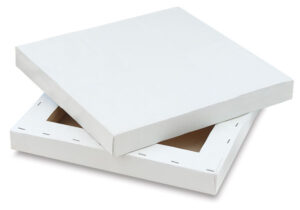
Of all the types of oil painting canvas available, gallery‑wrapped is the one I use most. With a few exceptions, nearly all of my paintings are created on this surface — from small 6×6 pieces to larger 24×36 works. It has become my go‑to choice because it feels natural and gives me the finish I want.

I like gallery‑wrapped canvas because it is built so the fabric stretches over the frame and wraps around the sides, leaving the edges clean and uninterrupted. This design allows me to paint along the sides, giving the finished piece a seamless look that draws attention from every angle.

Another reason I choose gallery‑wrapped canvas is the flexibility it offers once a painting is complete. Because the edges are finished, the artwork can be displayed without a frame for a contemporary presentation, or it can be framed for a more traditional look. Some of my buyers prefer the modern feel, while others choose a frame — either way, the painting retains its character and presence.

Stretched Canvas

oil painting stretched canvas

There was a time not too long ago when stretched canvas was the only option available to artists. This type of canvas is classic, having been around for more than 500 years, and it carries with it a long tradition in the history of painting. For centuries, masterpieces were created on stretched canvas, and that legacy continues to give it a timeless presence even today.

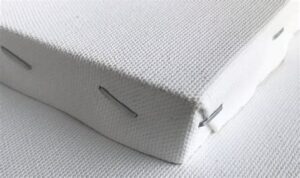
Stretched canvas is the traditional style, with the fabric pulled tightly over a wooden frame and secured with staples or tacks along the sides. The edges are typically left raw and unpainted, echoing the way paintings were prepared by the Old Masters. This gives the artwork a formal character, and once framed, the painting takes on a distinguished presence that highlights its place in a room.

I don’t paint on stretched canvas anymore, since I made the switch to gallery‑wrapped, but I do have a few paintings created on it from that earlier period. When I used stretched canvas, I purchased artist‑grade surfaces pre‑stretched and primed, ready to receive paint. That ensured durability and consistency, while allowing me to focus on the painting itself. Although I now prefer gallery‑wrapped canvas, I still appreciate the history and craftsmanship of stretched canvas, and the few pieces I created on it continue to hold their own as part of my body of work.

See my available oil paintings on stretched canvas at the link.

Canvas Board

oil painting canvas board

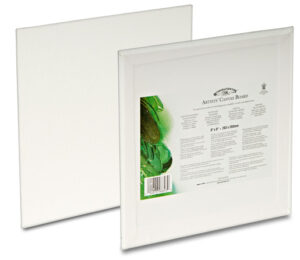
Canvas board has been around for decades. It was the first surface I painted on as an art student under my dad’s guidance. Later I practiced with it while studying under other art teachers. I found it practical — inexpensive, lightweight, and easy to carry. Through the years, I’ve continued using canvas board; some of my best pieces are created on it.

Canvas board is made by mounting canvas fabric onto a rigid, lightweight panel, creating a sturdy surface that resists warping. Though thinner than stretched canvas, it provides excellent durability and is easier to frame. It’s also less fragile than gallery‑wrapped or stretched canvas, which makes it easy to care for.

Its portability has made canvas board a favorite among plein air painters, who appreciate how manageable it is outdoors. I also rely on it in my studio, especially for smaller works where a sturdy support is ideal. Paintings composed on canvas board are not inferior to those on stretched canvas. Many highly skilled artists prefer it, and I am one of them. Once framed, a canvas board painting carries the same presence and longevity as any other canvas type.

See my line of oil paintings on canvas board.

In Conclusion

The choice of canvas shapes the presentation and endurance of an oil painting. No single type is inherently better than another. Each has its own strengths, whether it’s the sleek edges of a gallery-wrapped, the tradition of stretched canvas, or the practicality of canvas board.

In my studio, selecting the right canvas is part of the care I put into every painting. It ensures that the finished artwork not only reflects my vision but also stands ready to bring beauty and character for years to come.

Art Gallery Quick Links

Animals     |     Flowers     |     Landscapes     |     Marine

People     |     Space Art     |     Still Life

Additional Reading

My Oil Painting Process: From Blank Canvas to Finished Work

The Importance of Varnishing Oil Paintings

Using a Viewfinder to Capture the Essence of My Art

Have a question?

If you have a question about this blog on three types of oil painting canvas, please contact us, and we’ll be happy to answer your questions.

Thanks for looking!

Feel free to share this with your friends.


Affordable Oil Paintings On Canvas

Announcing Affordably Priced Oil Paintings by Teresa Bernard
affordable oil paintings

ATTENTION all art lovers and collectors on a budget!

I am pleased to announce a line of hand-painted fine art designed especially for budget-conscious art enthusiasts. These unique, one-of-a-kind affordable oil paintings on canvas are perfect for adorning homes or workspaces without breaking the bank. Now anyone can own one or more of my original oil paintings.

This line of budget-friendly artwork is a standard size of 9×12 inches. Each painting is skillfully composed on a premium heavy-duty canvas board made of primed canvas over a sturdy lightweight cardboard, ensuring durability and affordability without compromising on design or quality.  In addition, every painting comes with a custom Certificate of Authenticity, as well as FREE shipping and handling inside the United States.

Affordable Oil Paintings for Sale

Landscapes

Click or tap on the thumbnail link for more information and to purchase.

economical oil paintings
Under The Shade Tree
(2023)
12″ w x 9″ h
affordable oil paintings
Under the Shade Tree in Autumn (2023)
9″ w x 12″ h
landscape paintings for sale
Lightning Strikes
(2023)
12″ w x 9″ h
rural landscapes artwork
Hilltops
(2023)
9″ w x 12″ h
shop for silhouette trees art
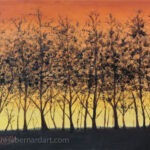
Trees at Dusk
(2022)
12″ w x 9″ h
reasonably priced artistic works
Blue Shutters
 (2022)
12″ w x 9″ h
modestly priced artwork
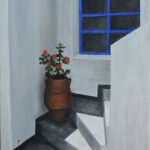
Up The Steps
(2021)
9″ w x 12″ h
inexpensive works of art
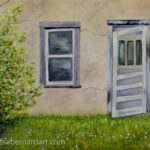
Raggedy Ol’ Farmhouse (2021)
12″ w x 9″ h
economy priced paintings
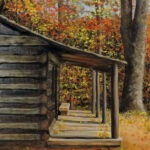
Log Cabin in the Autumn Woods (2021)
9″ w x 12″ h
economically priced painted compositions
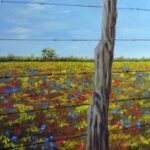
Fence Post in The Meadow (2020)
9″ w x 12″ h
Marine

Click or tap on the thumbnail link for more information and to purchase.

affordable oil paintings
Boat Fenders
(2003)
9″ w x 12″ h
Space Art

Click or tap on the thumbnail link for more information and to purchase.

affordable oil paintings
Asteroid Collision Course (2023)
9″ w x 12″ h
shop for space art paintings
Path of The Comet
(2023)
9″ w x 12″ h
economy art piece
Little Star Gazer
(2022)
9″ w x 12″ h
affordable oil paintings
Fly Me to The Moon
(2020)
9″ w x 12″ h 
Still Life

Click or tap on the thumbnail link for more information and to purchase.

economy artwork
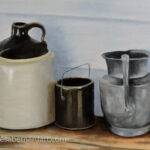
Three Rustic Jugs
(2021)
12″ w x 9″ h
Wildlife

Click or tap on the thumbnail link for more information and to purchase.

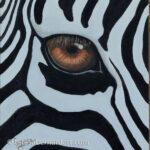
best buy realism art
Eye of the Zebra 
(2021)
9″ w x 12″ h


Themes That Stand Alone

Explore a collection of original oil paintings by Teresa Bernard that defy easy categorization. Each theme stands on its own—united not by subject, but by the distinct artistic ideas they express, from the drama of silhouettes to the intrigue of tightly focused compositions.

Affordable Oil Paintings on Canvas

Silhouette Paintings — Capturing Moments in Shadow

Transportation Paintings — The Art of Getting There

Art Gallery Quick Links

Animals     |     Flowers     |     Landscapes     |     Marine

People     |     Space Art     |     Still Life

Additional Reading

Paintings by Theme Index: The Stories Behind My Art

Artist Blog Index: My Writings on the World of Fine Art

Have a question?

If you have a question about this press release, please contact us, and we’ll be happy to answer any of your questions.

Thanks for looking!

Feel free to share this with your friends.


Southwest Paintings NOT by Teresa Bernard

Art has always been a source of joy and connection in my life, and each painting I create carries my name with pride. That’s why it is so disheartening to know my artistic identity has been stolen.

For nearly two decades, my name, “Teresa Bernard,” has been misused to promote a line of southwest paintings I did not paint. Certain individuals continue to exploit my identity in this way. This ongoing misuse is fraudulent and misleading, and it has created confusion for art buyers who believe they are purchasing my work when they are not.

Beyond the personal impact, this matters because authenticity is the foundation of the art world. When my name is misused, it not only damages my reputation but also deceives collectors who deserve honesty and transparency in what they buy.

Art Buyers Beware!

Art buyers should know that the southwest paintings being sold under my name are NOT authentic Teresa Bernard originals. Contrary to what some unscrupulous art dealers tell their unsuspecting customers; I’m not the artist of the southwest-style paintings they are trying to sell. Let me repeat, I am not a southwest painter, and I have never been.

southwest paintings scam
Southwest paintings NOT by Teresa Bernard

These so-called “southwest paintings by Teresa Bernard” are being sold on eBay, Offer Up, Let Go, Fine Art America, and other places. I’ve even found them sold on a few auction websites as well. The listings say, “Teresa Bernard painted them,” but they are not mine. I did not paint any of those paintings. Also, the listing agent uses excerpts of my own bio without permission, which is an infringement of copyright. They use my bio in their descriptions to make these paintings seem more legit when they in fact are not.

Why it Matters

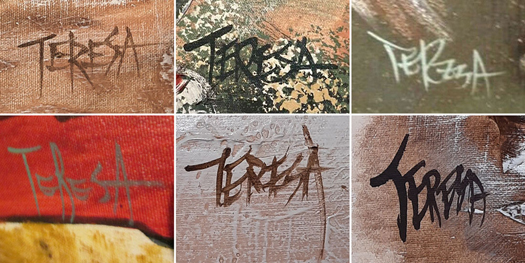
When you compare the southwest paintings to mine, you will find my artistic style is entirely different from those paintings. There is no mistaking that fact. One look around my website confirms this. I’ve studied a large sampling of photos of these so-called “Teresa Bernard southwest paintings,” and there is a lack of consistency in artistic style from one painting to the next. It looks like they are the works of multiple artists. There are also variations in the signatures from one painting to the next. And none of those signatures look anything like mine.

Teresa Bernard Southwest Paintings
Signatures vary from painting to painting and do not match.

Why it Should Matter to You

I receive emails all the time from individuals wanting verification that a particular southwest painting they have in their possession, or one they’re thinking of purchasing, is one of mine. They even attach a photo for me to look at. You can imagine their confusion when they learn I don’t do southwest paintings and that I’m not the artist of their painting. Still, others become quite indignant to learn their art dealer lied to them and fraudulently used my name to sell them a painting I didn’t paint. I feel bad for these individuals because they have fallen for a scam. All I can do is tell them to do their research; know what they are buying and whom they are buying from.

Who is this Teresa Bernard, Artist of Southwest Paintings?

At first, I thought it was a case of mistaken identity—that there is another artist in the world with the same name as me, and these must be her paintings. So, I didn’t give too much thought to the seriousness of this situation until the emails started coming in on a regular basis.

So, I did some research to see if I could discover who this southwest artist is. After searching on the internet, I quickly found out that I’m the only artist with the name Teresa Bernard who comes up in the “SERPS” (Search Engine Results Pages). There is no other artist with my name; I’m the only one. Go ahead; try a search yourself to see what you come up with. I’ll wait.

Don’t you think it bizarre that there is absolutely NO information on the internet regarding this artist of southwest paintings? Why is it, if she is such a famous artist and her paintings are highly sought after, that she is nowhere to be found?

You won’t find a website for her or the location of her art studio. There are no art shows, exhibitions, or gallery announcements for her work. And you won’t find any press releases, news articles, or magazine articles either. There is absolutely no information whatsoever about this southwest painting artist. Therefore, I am convinced she doesn’t exist anywhere or anyhow. Please prove me wrong if you can. I welcome it.

Proof of Authenticity

Certificate of AuthenticityFurthermore, I provide a custom-designed Certificate of Authenticity for each of my paintings. This is something you won’t get with any of the southwest paintings by the imposter.

The art dealers trying to pass their paintings off as authentic originals by Teresa Bernard have no proof whatsoever of who painted them. All you have is their word for it. Can you really believe 100% of what they say? When you ask them for proof, they tell you to search the internet for the artist and compare the artwork and signatures. Well, we already know what happens when we do that, don’t we?

The truth is, they have absolutely no proof at all. You just have to take their word for it. They end the conversation when you question them about the matter too. This is further evidence that something is amiss, and they know it but don’t care. They just want to make a buck at someone else’s expense.

Made in China

I believe these southwest paintings are created in China. Then they are shipped to the U.S., and the Chinese tell their buyers that I am the artist. They exploit my name because I am all over the internet. If this isn’t the case, why can’t this other so-called artist, “Teresa Bernard,” be found? Why doesn’t she show herself? Or step up to make a public appearance and make herself known to the world? I’d be happy to send the individuals who email me to her website if only she had one.

I’m Not the Only One

Joanna Gaines of Fixer Upper
Joanna Gaines

This scam isn’t an isolated incident either. Joanna Gaines of “Fixer Upper” has also had her name misused in much the same way I’m experiencing.  It was even rumored that she was leaving her show to promote a line of skincare products. According to Joanna, this is simply not true. You can read her story here.

See For Yourself

If you are still convinced that I am the artist of your painting after reading this blog post, then before you send me an email with a photo attached, check out My Oil Paintings Index. It is a visual list of just about all my paintings. If your painting isn’t there, then it isn’t one of mine. However, if you find it pictured, I’m happy to answer your questions.
Art Gallery Quick Links

Animals     |     Flowers     |     Landscapes     |     Marine

People     |     Space Art     |     Still Life

Additional Reading

Why Owning a Teresa Bernard Oil Painting is So Special

Benefits of Buying Art Directly from the Artist

Have a question?

If you have a question about this matter, please contact us. We’ll be happy to answer any of your questions.

Thanks for reading this!

Feel free to share this with your friends.