
A painting isn’t truly complete until a coat of varnish brings it home.
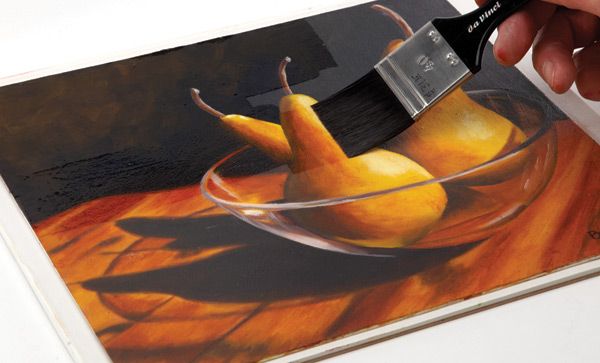
There comes a point when I step back from a painting and know the work is finished — the brushwork is settled, the colors are where they belong, and the whole piece feels quiet and sure. But even in that moment, it isn’t complete. One last step remains, and it’s an important part of my studio practice. Varnishing my oil paintings is how I bring a piece into its final form before I call it done.
Before I reach that final step, the painting needs time to dry. The composition is finished, but the paint is still wet. So, I use this drying time to look it over one last time. I check the overall balance and how the painting looks as a whole. Once I’m satisfied that nothing needs changing, I’m ready for the final step.
Why I Varnish
Varnishing my oil paintings is always the final step. It gives each surface a consistent finish and brings the colors back to how they looked while I was working. The varnish also adds a clear layer of protection to preserve the paintings over time. I don’t let any painting leave my studio until I varnish it.
Once the varnish dries, the painting is complete. It now has the finish and presence I want it to have, and it’s ready for its new home. Varnishing my oil paintings is a simple part of my studio practice, but it’s an important one. This final step brings the work from “finished” to fully done.
Art Gallery Quick Links
Animals | Flowers | Landscapes | Marine
People | Space Art | Still Life
Additional Reading
The Types of Oil Painting Canvas in My Studio
Using a Viewfinder to Capture the Essence of My Art
Thanks for reading this!
Feel free to share this with your friends.