
Choosing the Perfect Oil Painting for Your Home or Office

choosing an oil painting

If you think choosing an oil painting is mostly about subject and color, you may be overlooking the part that matters most.

Choosing the perfect oil painting has very little to do with decorating a room and everything to do with choosing a piece of original art you want to live with. Buyers often think they’re choosing a color scheme or a style, but what they’re really choosing is a relationship — with the artist, with the subject, and with the painting’s presence in their space.

As an oil painter, I’ve watched people make decisions they later regret, not because they chose the “wrong” painting, but because they were looking at the wrong things. Here’s what actually matters when you’re choosing an original oil painting — the things buyers often overlook, and the things artists pay attention to instinctively.

Look at the Painting Up Close

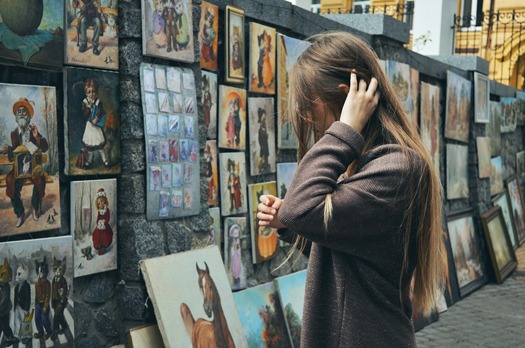
Brushwork reveals things you can only appreciate when you’re standing close to the painting. Stand close enough to see the decisions the artist made — the edges, the texture, the places where the paint thins or thickens. This is where the life of the painting lives. If you feel nothing when you’re up close, it may not be the right piece for you.

Pay Attention to the Artist’s Hand, Not the Trend

People often choose art the way they choose furniture: what’s popular, what’s neutral, what “goes with everything.” But original art isn’t décor. It’s the result of years of practice, choices, and personal vision. When you choose a painting, you’re choosing the artist behind it. If their work resonates with you, that connection will outlast any trend and any change in color scheme.

Notice How the Painting Changes the Room — and You

A good painting doesn’t just fill a wall; it changes the atmosphere. Some paintings quiet a room. Others energize it. Some make you pause every time you walk by. Pay attention to how the painting affects your breathing, your thoughts, and the way you feel in the space. The right painting doesn’t just match your room — it shapes it. And the right painting doesn’t just reflect your taste — it reveals it.

Choose the Painting You Keep Thinking About

Buyers often walk away from the painting they actually want because they talk themselves into something “more practical.” Maybe it’s a safer subject, a more neutral color, or a smaller size. But the painting you can’t stop thinking about — that’s the one that belongs with you. Original art has a way of choosing its owner. When a piece lingers in your mind after you’ve left the gallery or closed the browser, pay attention to that.

Don’t Overthink It

You don’t need a degree in art to choose the perfect oil painting. You only need to notice what pulls you in, what holds your attention, and what you want to live with. A painting is not a design decision — it’s a companion. Choose the one that feels like it belongs in your life, not just on your wall.

Once you start looking at original oil paintings this way, “choosing the perfect painting” stops being a stressful decision and becomes a natural recognition: you’ll know the right one when you can’t imagine leaving without it.

Art Gallery Quick Links

Animals     |     Flowers     |     Landscapes     |     Marine

People     |     Space Art     |     Still Life

Additional Reading

Starting Your Own Art Collection

Thanks for reading this!

Feel free to share this with your friends.


Buying Oil Paintings as an Investment

investment oil paintings

When people ask me about investment oil paintings, they’re usually expecting a complicated formula or some insider trick. But it’s really much more straightforward. When you’re looking at a painting with investment in mind, you’re simply paying attention to the things that give the artwork its identity, its longevity, and its place in the artist’s story. Those details matter just as much as the painting itself.

Understanding What You’re Really Buying

Every painting carries a bit of information that helps you understand what you’re looking at. The title, any inscriptions, and the artist’s signature all contribute to the painting’s history. A thoughtful title can make a piece more memorable, and the signature shows the work truly belongs to the artist. These aren’t technicalities — they’re part of the painting’s documented history, and provenance is something collectors and future buyers pay attention to.

The physical presence of the painting matters too. Size, canvas type, and the way the piece was constructed all play a role in its value. Larger works often require more time and materials, which can place them at a higher price point, while smaller pieces are easier to live with and sometimes more approachable for new collectors. Whether the painting is on gallery‑wrap canvas, stretched canvas, or panel, each choice tells you something about how the artist intended the work to be displayed.

Documentation is another part of the painting’s story. A certificate of authenticity isn’t just a piece of paper — it’s a record that follows the artwork throughout its life. It confirms the painting’s legitimacy and gives future collectors confidence in what they’re buying. Good documentation strengthens the painting’s history and supports its long‑term value.

Condition and the Artist Behind the Work

Condition is something you can’t ignore. Paintings age, and that’s normal, but how they’ve aged matters. Cracks, fading, warping, or flaking can affect value, especially if the damage is significant or poorly repaired. When you’re considering investment oil paintings, you want to know the piece has been cared for — or at least understand what it may need in the future.

And then there’s the artist. Their reputation, their place in the art world, and the demand for their work all influence value. Established artists often command higher prices, but emerging artists can be a smart choice too. If you connect with their work and believe in their direction, you’re not just buying a painting — you’re supporting the growth of their career. Sometimes those early pieces become the most meaningful ones to own.

Investing in oil paintings isn’t about chasing trends or treating art like a stock chart. It’s about choosing work that’s original, well‑made, and grounded in the artist’s hand and story. When you understand what you’re looking at — the identity, the craftsmanship, the condition, and the artist behind it — you’re already making a more informed and meaningful choice. That’s what gives oil paintings as an investment their staying power.

Art Gallery Quick Links

Animals     |     Flowers     |     Landscapes     |     Marine

People     |     Space Art     |     Still Life

Additional Reading

Common Misconceptions About Buying Art

Choosing the Perfect Oil Painting for Your Home or Office

Starting Your Own Art Collection

Have a question?

If you have a question about this blog on what to consider when buying oil paintings as an investment, please contact us, and we’ll be happy to answer your questions.

Thanks for reading this!

Feel free to share this with your friends.


The Benefits of Buying Art Directly from the Artist

buying art from artist

Buying art directly from the artist offers a more personal and meaningful experience for both the artist and the collector.

A More Personal Way to Collect Fine Art

There’s something different about bringing home a piece of fine art when it comes straight from the person who created it. The exchange feels quieter, more grounded, and more human. You’re not just choosing a piece you enjoy — you’re choosing the hands, the eyes, and the lived experience behind it. That connection shapes the way the artwork settles into your life.

People buy fine art in two ways — through art intermediaries or directly from the artist. Buying through intermediaries can feel more distant, with less connection to the person who created the work. But when the purchase comes straight from the artist, the experience feels clearer and more grounded. It keeps things simple and honest, without layers between you and the work.

Clear Origin and Provenance

When you purchase fine art directly from the artist, you know exactly where the painting comes from. It moves from the studio to your home without passing through unknown hands or processes. That clarity becomes part of the painting’s provenance — the documented history of where it came from and who created it. For many collectors, that certainty is part of the integrity of owning original art.

Connecting with the Artist

Buying fine art directly allows for a natural, person‑to‑person interaction. You’re speaking with the artist who mixed the colors, made the decisions, and lived with the painting while it took shape. Some collectors enjoy staying in touch; others simply appreciate knowing the artist is accessible. Either way, the exchange feels genuine and uncomplicated.

The Story Behind the Work

Every piece of fine art begins with a reason — a moment, a memory, or a spark that made the artist stop and say, “This belongs on canvas.” When you buy directly, you have the chance to hear that story in the artist’s own words. It doesn’t turn the painting into a lesson; it simply deepens your understanding of what you’re bringing into your home.

Supporting the Work Itself

Purchasing fine art directly supports the artist’s ability to keep creating. Your investment goes toward the next canvas, the next idea, and the time needed to pursue the work. Artists don’t take that lightly. Every sale is a quiet encouragement that allows the creative process to continue.

Understanding the Price

When you buy fine art directly from the artist, the price reflects the real cost of creating the work — the materials, the time, the years of experience, and the practical expenses of running a studio. There’s no commission added on top, but there are still real costs behind the scenes: packaging, shipping, credit card fees, and the ongoing work of maintaining a professional art practice. Original art isn’t something to bargain over; it’s the result of skill, attention, and intention.

Owning Something One‑of‑a‑Kind

Buying fine art directly means choosing a piece that exists only once. It isn’t part of a run or a series of duplicates. It’s a singular work that carries the artist’s hand in every brushstroke. For many collectors, that uniqueness is part of the joy — knowing the piece they chose is truly their own.

A Meaningful Homecoming

Buying fine art directly from an artist is more than acquiring a painting — it’s choosing a more personal, grounded way of bringing art into your life. You’re supporting the person who created it, understanding the story behind it, and forming a connection that lasts long after the painting is hung. For many collectors, that experience becomes part of the artwork itself.

Art Gallery Quick Links

Animals     |     Flowers     |     Landscapes     |     Marine

People     |     Space Art     |     Still Life

Additional Reading

Common Misconceptions About Buying Art

Buying Oil Paintings as an Investment

Have a question?

If you have a question about this blog on the Benefits of Buying Art Directly from the Artist, please contact us. We’ll be happy to answer your questions.

Thanks for reading this!

Feel free to share this with your friends.


Tree Paintings — Capturing the Calm of Nature

There’s a quiet story running through the land, and my tree paintings are where it begins to unfold.

Trees shape the land with a steadiness that feels essential, and their quiet strength is part of what draws me to them. They bring a sense of completeness to a scene — a presence that settles the land and gives it balance. Without them, a landscape often feels unfinished, as if something important is missing. Beyond their beauty, they offer shade and shelter, hold the soil in place, and renew the air we breathe. They do their work quietly, contributing to the world in ways that are both practical and deeply generous. They are part of God’s handiwork, woven into creation with intention and purpose.

The Why of My Tree Paintings

What draws me to paint trees is not just what they are, but what they bring to a landscape. My tree paintings grow out of noticing how their presence anchors a scene — how they steady it, settle it, and give it a sense of belonging. When I choose a tree to paint, I’m responding to the way it shapes the land around it, the way it gathers the scene together without demanding attention. There’s a quiet calm in that presence, a quiet order that feels true to nature itself.

In my tree paintings, I try to express that quiet influence. The paintings are less about depicting a tree and more about conveying the calm strength it brings to the land. I’m drawn to the way a tree can hold a scene in place, how its presence can guide the eye and give the landscape its sense of order. Painting trees becomes a way of honoring the beauty placed in the world and reflecting a small part of it through my own hands.

Take a moment to explore my tree paintings that reflect the quiet strength and natural beauty of trees.

Tree Paintings on Canvas

Click or tap on the thumbnail link for a larger image and more information.

shade tree painting
Under The Shade Tree
(2023)
12″ w x 9″ h
autumn shade tree paintings
Under the Shade Tree in Autumn (2023)
9″ w x 12″ h
pine trees forest paintings
Song of The Trees
(2023)
24″ w x 36″ h
landscapes with trees
Hilltops
(2023)
9″ w x 12″ h
silhouette trees art
Trees at Dusk
(2022)
12″ w x 9″ h
landscape paintings
Texas Flag Barn
(2015)
20″ w x 16″ h
landscape paintings
Texas Longhorn in the Meadow (2013)
20″ w x 16″ h
camelthorn trees
Camelthorn Trees of Africa (2011)
24″ w x 24″ h
lighthouse trees painting
Currituck Beach Lighthouse (2008)
11″ w x 14″ h

In The Company of Botanicals

Experience the quiet beauty of nature through original oil paintings that celebrate the character, color, and life found in the botanical world — from cultivated garden plants and untamed wildflowers to the quiet strength of trees.

Paintings of Garden Plants — Celebrating the Beauty of Nature

Paintings with Wildflowers — Blossoms Unleashed

Tree Paintings — Capturing the Calm of Nature

Art Gallery Quick Links

Animals     |     Flowers     |     Landscapes     |     Marine

People     |     Space Art     |     Still Life

Additional Reading

Artist Blog Index: My Writings on the World of Fine Art

Have a question?

If you have a question about this blog on tree paintings, please contact us, and we’ll be happy to answer your questions.

Thanks for reading this!

Feel free to share this with your friends.


Fine Art: It Isn’t What You Think

what is fine art

What Is Fine Art? A Guide to Meaning, Medium, and Mastery

Fine art is the visual expression of human creativity—where skill and imagination meet. Fine art isn’t complicated or academic. An artist creates it with intention to communicate something real. Trends don’t define it; the artist’s purpose does. They want to say something, not fill a wall.

More Than a Definition

When people ask what fine art is, they’re usually looking for more than a definition. They want to understand why some work feels different—why it holds your attention instead of fading into the background. Fine art gives you a reason to stop and look. It’s not decoration for the sake of matching a room. It’s meant to make you think, notice, or feel something.

Mediums That Endure

Fine art traditionally includes painting, sculpture, drawing, and printmaking—mediums that have carried human stories for centuries. These mediums last because they show the artist’s hand. You can see the decisions, the corrections, the commitment. Styles vary widely, but the heart of fine art isn’t the style. It’s the intention behind the work and the care put into making it. These mediums also hold up over time; when someone buys original art, they’re investing in something that won’t fade or fall apart in a few years.

Skill Meets Vision

Fine art comes from a mix of ability and imagination. The artist needs both. Skill gives the work structure; vision gives it direction. That combination is what lifts this type of artwork beyond craft or design.

The word “fine” doesn’t mean “better.” It simply means the work exists for expression, not for a practical purpose. It is art made to communicate, not to serve a function. When you look at a piece of art, you’re seeing both the artist’s training and their judgment — the choices that make the work feel intentional instead of accidental.

The Viewer’s Role

Fine art is a conversation. It asks you to slow down, look longer, and bring your own experiences to what you’re seeing. A painting might stir a memory. A sculpture might shift your thinking. Good art doesn’t tell you what to feel — it gives you room to respond in your own way. Meaning isn’t fixed. It develops as you spend time with the work.

What Constitutes Fine Art?

So, what defines it? It’s not a checklist—it’s a convergence of qualities:

    • Intentionality: The artist creates with purpose.
    • Craftsmanship: Skill and technique are present, even if subtly.
    • Emotional or intellectual depth: The work invites you in.
    • Originality: The artist’s voice is unmistakably theirs.

Good art doesn’t need to be grand or complicated. It needs to be honest and made with care.

A Living Discipline

Art isn’t static. It grows with the artist, with culture, with time. But its core stays the same: fine art exists to make you pause and consider something you might have overlooked. Whether it hangs in a gallery or sits in a quiet corner of a home, good artwork creates space for reflection — a steady reminder that original work carries depth and intention. That’s why fine art holds your attention — the more time you spend with it, the more you notice.

Art Gallery Quick Links

Animals     |     Flowers     |     Landscapes     |     Marine

People     |     Space Art     |     Still Life

Additional Reading

What Defines Fine Art Today

Art Appreciation: Where to Begin

Masterpiece Oil Paintings — When a Painting is More Than Just Art

Your Feedback

“I think you should be complimented for the definition you came up with – it reads as thorough and yet completely understandable to readers who don’t have much experience with fine art.  Based on all the sources I checked prior to, and after finding, your website that is quite an achievement. “ — Robert (RA) May, Berkeley CA

Have a question?

If you have a question about this blog, please contact us, and we’ll be happy to answer any of your questions.

Thanks for reading this!

Feel free to share this with your friends.

The Why of Christian Art

Christian art still life painting
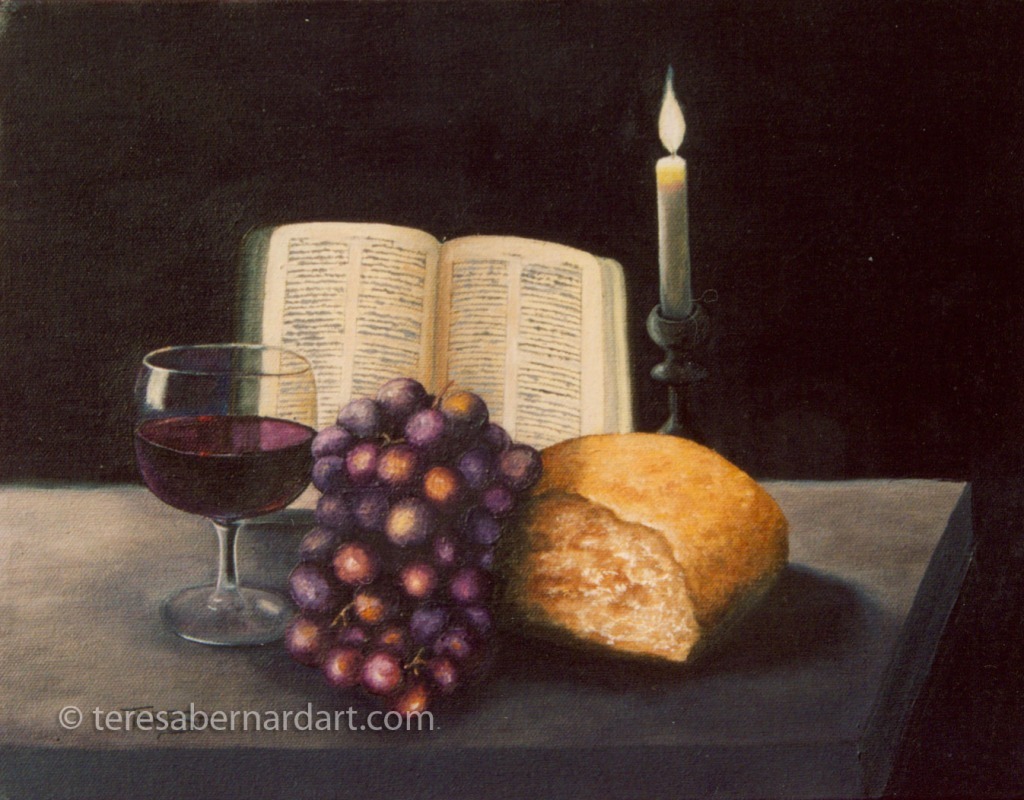
The Communion Table by Teresa Bernard

Christian art—what it is, and why artists keep returning to it

Christian art is often described in big, formal terms, but at its core, it’s simply art shaped by faith and the stories that have guided believers for centuries. Instead of functioning as doctrine or decoration, Christian art gives visual form to ideas people hold close — hope, mercy, sacrifice, redemption, and the presence of a loving God in ordinary life.

Christian art is created by artists who wish to express their faith, explore spiritual truths, and glorify Lord God through their creativity. But more than that, it offers viewers a way to slow down and see familiar stories with fresh eyes. That’s really the heart of the why of Christian art.

Spiritual expression that feels personal

Christian artists use their creative talents to express their beliefs, experiences, and devotion to Almighty God. In paint, that expression often shows up in small decisions — the way light falls across a figure, the quietness of a gesture, or the weight carried in a shadow. Through visual arts like painting, sculpture, and iconography, they communicate their understanding of biblical narratives, theological concepts, and the Christian experience. It’s less about teaching and more about sharing something honest and lived.

Art as devotion, shaped slowly and with intention

Creating religious art is often seen as an act of worship. Artists believe that their work can honor the Lord and inspire others to connect with Him. The process itself becomes a kind of devotion — patient, steady, and attentive. By depicting biblical scenes, saints, or religious symbols, they participate in a form of spiritual devotion. The finished piece carries that quiet intention with it, offering viewers a moment of stillness rather than instruction.

An invitation rather than an argument

Some Christian artists create art with the purpose of evangelizing or defending their faith. Art can serve as a powerful tool to convey spiritual messages, share the Gospel, and engage with non-believers. But often, the most compelling Christian art doesn’t try to persuade — it simply invites. It opens a door, not with words, but with presence.
It lets viewers approach meaning at their own pace.

Connecting faith to the world around us

God is the ultimate Creator, and Christian artists recognize their role as co-creators. They engage with culture, using their art to reflect God’s beauty and truth. Across history, Christian art has always adapted — absorbing the visual language of its time while offering a steady point of reference rooted in faith. Art becomes a way to respond to the world, not escape from it. It keeps spiritual ideas connected to everyday life.

Symbols that help people see more clearly

Christian art often employs symbolism. For example, a cross can allude to the death of Christ and redemption, while bread and wine evoke communion with God. These symbols work because they’re familiar, yet each artist interprets them differently. Artists infuse their work with meaning that unfolds slowly, inviting viewers to look closer. Symbolism becomes a gentle guide — not a puzzle, but a way of pointing toward something deeper.

Stories that stay with us

Early religious art focused on typological narratives, drawing parallels between Old Testament stories and events in the life of Jesus. Over time, artists depicted miracles, the crucifixion, and other significant moments from the Bible. These stories endure because they help people see faith in a tangible way. Christian art keeps them close, not as distant history, but as something that still speaks. It gives shape to stories that continue to matter.

Why Christian art still matters today

Christian art remains meaningful because it helps people see faith, not just think about it. It offers a quiet place to reflect, a familiar story seen in a new light, or a moment of comfort in a world that moves too quickly. Whether it’s a stained-glass window, a Madonna and Child, or a contemporary painting rooted in Christian themes, the purpose stays the same: to make spiritual truth visible in a way that feels human, approachable, and worth spending time with.

⇒ See My Christian Art Series Here

Art Gallery Quick Links

Animals     |     Flowers     |     Landscapes     |     Marine

People     |     Space Art     |     Still Life

Additional Reading

My Christian Art Series

Visual Art in the Bible

Have a question?

If you have a question about this blog on Christian art, please contact us, and we’ll be happy to answer your questions.

Thanks for reading this!

Feel free to share this with your friends.
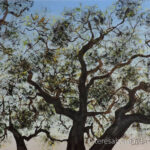


How to Truly Appreciate Fine Art

how to appreciate fine art
Starry Night by Vincent van Gogh (1889)

It’s easy to enjoy a painting at first glance. But when you want to appreciate fine art in a way that feels informed and intentional, the surface is only the beginning. Most people look at a painting and respond to the subject — a landscape, a still life, a figure — without realizing that the real strength of fine art comes from the decisions behind it. Once you start noticing those decisions, the whole experience changes.

Noticing the Structure Behind the Image

A good place to begin is with the structure of the painting. Every strong piece has an underlying design that holds it together — the arrangement of shapes, the balance of light and dark, the way your eye moves through the scene. You don’t have to analyze it; you just have to notice whether the painting feels balanced and intentional. When the structure is strong, the painting feels grounded. When it’s weak, something feels unsettled, even if you can’t name why.

From there, your attention naturally shifts to composition — the way the artist guides your eye. This isn’t something you study; it’s something you sense. A thoughtful composition feels clear. You know where to look first, and the rest of the painting supports that moment. When you appreciate fine art with this in mind, you begin to understand why some paintings feel complete while others feel scattered.

Craftsmanship is the next layer, and it’s one of the easiest ways to recognize quality. Confident brushwork, cohesive color, and intentional edges all signal experience and control. You’re not judging technique for the sake of technique — you’re noticing whether the artist’s hand feels sure. Good craftsmanship doesn’t call attention to itself; it simply makes the painting feel resolved.

As you move through these elements — structure, composition, craftsmanship — something interesting happens: you start to see the painting as a series of decisions rather than a single image. And that shift is what deepens your appreciation. You begin to understand why the painting works, not just that you like it.

Recognizing Presence and Building Confidence

This is also where interpretation becomes more meaningful. Instead of asking, “What does this painting mean?” you start asking, “What choices create the feeling I’m responding to?” That question opens the door to a more thoughtful connection. You’re not searching for a hidden message; you’re recognizing how the painting communicates.

And eventually, all of this leads to the moment collectors talk about — when a painting has presence. Presence isn’t mood or emotion; it’s the sense that the work is complete, intentional, and quietly confident. It’s the result of all the decisions working together. When you appreciate fine art with an understanding of these elements, you begin to recognize that presence immediately.

The more you look, the more natural this becomes. You start trusting your eye. You start noticing quality without effort. And that’s the real purpose of learning how to appreciate fine art — not to become an expert, but to feel confident choosing pieces that are strong, well‑crafted, and worth living with.

Art Gallery Quick Links

Animals     |     Flowers     |     Landscapes     |     Marine

People     |     Space Art     |     Still Life

Additional Reading

Art Appreciation: Where to Begin

Fine Art: It Isn’t What You Think

The Future of Fine Art: What Changes, What Endures

What Defines Fine Art Today

Have a question?

If you have a question about this blog on how to appreciate fine art, please contact us. We’ll be happy to answer your questions.

Thanks for reading this!

Feel free to share this with your friends.
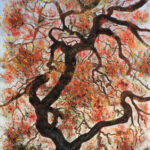
The Timeless Allure of Original Oil Paintings

The Timeless Allure of Original Oil Paintings

When it comes to art, few mediums can match the richness, depth, and tradition of oil paintings. The luminous quality of oil pigments, the texture of brushstrokes, and the ability to layer colors create a captivating visual experience. Whether you’re an art collector, an interior decorator, or simply someone who appreciates beauty, original oil paintings exude a timeless allure.

What Makes Original Oil Paintings Distinct

Each original oil painting carries the artist’s individual decisions — the shifts in pressure, the layered revisions, the moments of clarity that shape the final image. No two works are identical, and that individuality gives each painting its own presence. Instead of feeling manufactured or predictable, an original piece reflects the artist’s hand and the thought process behind it.

Oil painting also comes with a long, respected lineage. From Renaissance masters to contemporary realists, artists have relied on this medium for its depth, flexibility, and permanence. That history isn’t just background information — it’s part of what gives original oil paintings their sense of continuity and cultural weight. The techniques evolve, but the medium’s capacity for nuance remains unmatched.

Why This Medium Endures

Oil paint adapts to nearly any style — realism, impressionism, abstraction, or something entirely personal. Its slow drying time allows for subtle transitions, layered complexity, and a depth that rewards repeated viewing. Whether you’re drawn to quiet landscapes, bold color fields, or intimate portraits, oil paint has the range to carry that vision.

Original oil paintings also bring a sense of intention into a space. When you choose an original work, you’re not just selecting an image — you’re choosing the artist’s process, their history, and the presence of something made by hand.

A Lasting Presence in Any Collection

Original oil paintings are more than decorative accents; they hold cultural and historical value that outlasts trends. Collecting them connects you to a tradition that spans centuries. These artworks enrich a room, but they also gain depth over time, becoming part of the stories and spaces they inhabit.

Art Gallery Quick Links

Animals     |     Flowers     |     Landscapes     |     Marine

People     |     Space Art     |     Still Life

Additional Reading

Authentic Oil Paintings—What Makes Them Genuinely Unique

Why Owning a Teresa Bernard Oil Painting is So Special

Genuine Oil Paintings That Captivate Hearts and Homes

Have a question?

If you have a question about this blog on the allure of original oil paintings, please contact us, and we’ll be happy to answer your questions.

Thanks for reading this!

Feel free to share this with your friends.



Masterpiece Oil Paintings — When a Painting is More Than Just Art

masterpiece oil paintings

What Makes a Painting a Masterpiece?

Some paintings leave a lasting impression, pulling you in and stirring something deep inside. They make you wonder how mere brushstrokes can carry such power. But what truly defines masterpiece oil paintings? Is it the skill of the artist, the emotions they evoke, or the impact they leave behind? A true masterpiece isn’t just admired—it lingers in the mind, shaping how we see art and even ourselves. It extends beyond its canvas, inviting interpretation, sparking conversation, and transcending time.

Rather than narrowing the definition to one quality, it helps to look at the elements that consistently set these paintings apart.

The Story It Tells

A masterpiece isn’t just about color and technique; it tells a story. Whether full of mystery, movement, or deep emotion, masterpiece oil paintings make you think, feel, and interpret. They spark conversation and leave you questioning the meaning behind them. Every brushstroke carries intent, guiding the viewer through a silent narrative that speaks beyond words. A truly remarkable painting doesn’t simply exist—it invites engagement, reflection, and personal interpretation.

Art has the power to communicate in ways words cannot. A masterpiece often carries layers of symbolism, inviting viewers to uncover deeper meanings. Whether rooted in personal experience or cultural significance, each painting offers a unique perspective that resonates differently with every observer. This ability to sustain curiosity and reward repeated viewing is one of the qualities that elevates a painting into the realm of a masterpiece.

The Emotion It Stirs

There’s a particular kind of recognition that happens when a painting reaches you on a deeper level — a quiet moment of connection that feels almost instinctive. That’s the magic of emotional resonance. A masterpiece isn’t just visually impressive; it speaks to something within you. It can fill you with nostalgia, joy, melancholy, or awe. Beyond its colors and composition, it holds a story waiting to be discovered, inviting you to step closer and lose yourself in its details. The emotions it stirs may shift over time, yet its impact remains—a silent conversation between artist and viewer that transcends words.

Art has a way of reflecting the emotions we carry, sometimes revealing feelings we didn’t realize were there. Masterpiece oil paintings don’t lock you into a single interpretation—they evolve with you. What feels somber today may feel tender years from now. Great art isn’t static; it grows, shifts, and continues to speak long after the brush has left the canvas. This ability to forge a lasting emotional connection is what makes a painting unforgettable.

Innovation and Boldness

Masterpieces often stand apart because they introduce something new — not for shock value, but because the artist saw a different way forward. Some paintings reveal new approaches to light or composition; others challenge long‑held traditions. The best masterpiece oil paintings aren’t just beautiful—they expand what art can be.

Innovation in art doesn’t come from following rules. It comes from questioning them. Throughout history, groundbreaking paintings have shifted artistic movements, challenged cultural expectations, and broadened our understanding of creativity. These works don’t simply hang on walls; they reshape how we experience the world. Their boldness isn’t rebellion for its own sake — it’s vision, clarity, and the courage to create something genuinely new.

Technical Brilliance with Purpose

Of course, skill matters. A strong composition, confident brushwork, and a thoughtful understanding of light and shadow all contribute to the foundation of a great painting. But technique alone doesn’t create a masterpiece. What distinguishes the finest works is the way craftsmanship supports meaning.

A painting can be technically flawless yet emotionally empty. A masterpiece, however, uses technique as a vehicle for intention. The way a brushstroke suggests movement, the subtle interplay of color that conveys mood — these choices go beyond skill. They infuse the artwork with personality and presence. A true masterpiece is defined not just by precision, but by the harmony between technique and vision.

Timeless Impact

Some paintings endure for centuries because they capture something universal. Whether it’s love, struggle, beauty, or chaos, masterpiece oil paintings remain relevant across eras. Their themes transcend cultural shifts, resonating with viewers regardless of background or time period.

Art that lasts does more than please the eye — it invites reflection. Some masterpieces even gain new meaning as society evolves, proving that great art is never fixed in place. Whether displayed in museums or passed down through private collections, these works continue to shape artistic movements and redefine creativity. Their longevity isn’t an accident; it’s the result of clarity, intention, and a depth that outlives trends.

Why These Paintings Stay with Us

At the end of the day, masterpiece oil paintings are more than just paint on canvas—they’re a force. They make you feel, they make you think, and they stay with you long after you’ve seen them. Their power lies in the way structure, emotion, innovation, and craftsmanship come together to create something that feels complete and enduring.

Great art connects us across time and culture. It challenges, comforts, and expands our understanding of what it means to see — and to feel. A masterpiece isn’t just something we look at; it’s something that continues to meet us, again and again, with new insight and presence.

Art Gallery Quick Links

Animals     |     Flowers     |     Landscapes     |     Marine

People     |     Space Art     |     Still Life

Additional Reading

Authentic Oil Paintings—What Makes Them Genuinely Unique

Genuine Oil Paintings That Captivate Hearts and Homes

Have a question?

If you have a question about this blog on masterpiece oil paintings, please contact us. We’ll be happy to answer your questions.

Thanks for reading this!

Feel free to share this with your friends.



Hand-Painted Oil Paintings Have Their Own Unique Story To Tell

hand-painted oil paintings

Hand‑painted oil paintings carry more than an image — they hold the quiet story of how they came into being. Every brushstroke reflects a moment of attention, a decision, a shift in color or light that could only happen once. Unlike prints, which repeat the same surface endlessly, a hand‑painted work has a presence that belongs only to itself.

When you stand in front of a painting created by hand, you’re not just seeing the subject. You’re seeing the path the artist took to bring it into the world.

The Story Behind a Hand‑Painted Work

What makes hand‑painted oil paintings special isn’t a checklist of features — it’s the way the artist’s hand shapes their surface. The paint goes on in layers, sometimes thin, sometimes deliberate and textured, each one carrying a small part of the story. These choices give a painting its character and its sense of life.

How These Paintings Hold Their Own History

Hand‑painted oil paintings don’t hide the process that created them. You can often see where the brush slowed down, where the color shifted, where the artist changed direction. These traces aren’t flaws — they’re the history held in each piece, the small decisions that make a painting feel honest and human. And because oil paint has such depth and richness, it preserves these moments in the surface itself, allowing the story to stay visible for generations.

Why These Paintings Stay Meaningful

People are drawn to hand‑painted oil paintings because they offer a connection — not just to the subject, but to the person who created it. A painting made by hand carries intention. It carries time. It carries the quiet evidence of someone paying attention long enough to bring something real into the world.

That’s why these works continue to matter in homes. They don’t just decorate a wall; they become part of the rhythm of a room, part of the atmosphere, part of the story of the people who live with them.

When the Story Meets You

A hand‑painted oil painting invites you to slow down and notice the details that make it singular. Its surface holds the story of its making, and that story becomes part of the experience of living with it. When a painting carries the hand of the artist, it settles into a home with warmth and presence — a quiet reminder that the story behind a hand‑painted work is what gives it a life of its own.

Art Gallery Quick Links

Animals     |     Flowers     |     Landscapes     |     Marine

People     |     Space Art     |     Still Life

Additional Reading

Authentic Oil Paintings—What Makes Them Genuinely Unique

Genuine Oil Paintings That Captivate Hearts and Homes

Why Owning a Teresa Bernard Oil Painting is So Special

Have a question?

If you have a question about this blog, please contact us, and we’ll be happy to answer your questions.

Thanks for reading this!

Feel free to share this with your friends.