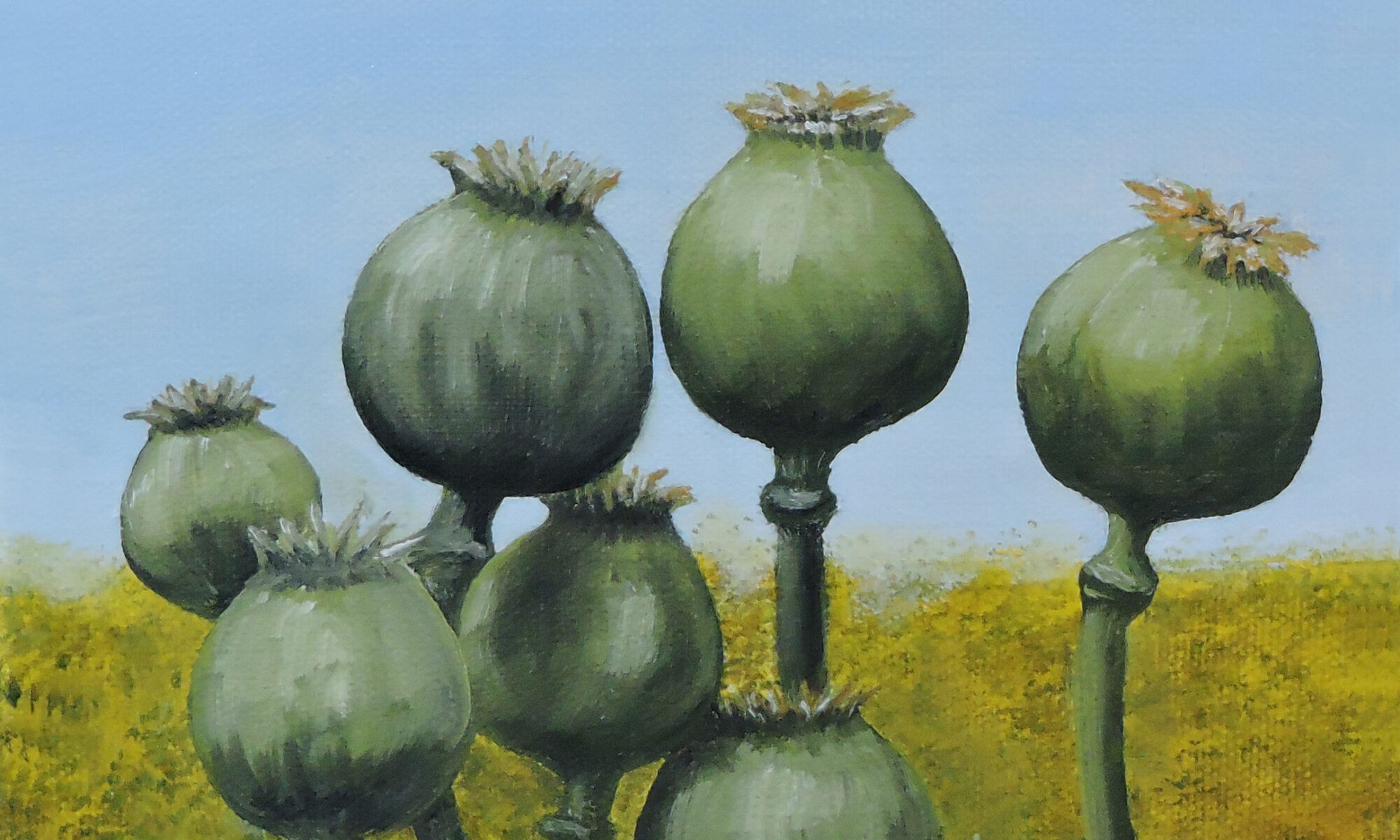

My Oil Painting Process: From Blank Canvas to Finished Work

Art is born in the journey from vision to presence.

My oil painting process is more than technique — it’s a rhythm that guides each work from canvas preparation to final varnish. By sharing these stages, I offer a glimpse into how a painting evolves from blank canvas to completion. Each step is intentional, reflecting both craftsmanship and care, so that the finished piece carries not only visual beauty but also lasting value.

Canvas Selection
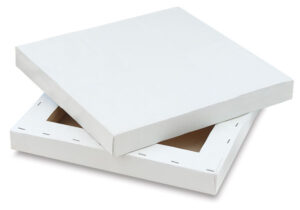
Teresa Bernard uses gallery-wrapped canvas in her oil painting process.
Gallery-wrapped Canvas

Every painting begins with a blank canvas. I prefer gallery‑wrapped canvas because it offers a clean, modern presentation. The canvas is stretched tightly around the sides of the frame, creating smooth, finished edges that I paint as part of the artwork. The result is a professional look that can be displayed with or without a frame, allowing the painting to suit both contemporary and traditional settings.

Making the Canvas Ready

Preparing the canvas is essential to the oil painting process. Even though the surface comes pre‑primed by the manufacturer, that alone isn’t sufficient. Before I begin painting, I apply additional coats of gesso to strengthen the surface, sanding between layers to create a smooth foundation. This ensures the pigments bond properly and the painting remains vibrant for generations, with a durable base built to endure over time.

Sketching The Image
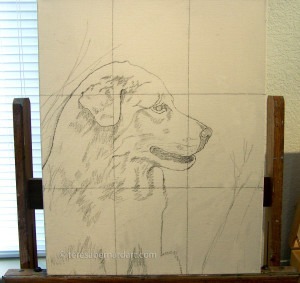
Sketching the image onto the canvas using a grid is part of the oil painting process.
Sketching the image on the canvas.

Once the canvas is ready, I continue the oil painting process by sketching the image onto the surface. Every painting begins with a simple grid that helps me place the focal point and other elements where they will best complement the composition. Using pencil or charcoal, I sketch the image in detail, including shadow areas. This careful planning ensures balance and proportion, qualities that give the finished work its sense of harmony.

Laying the Foundation
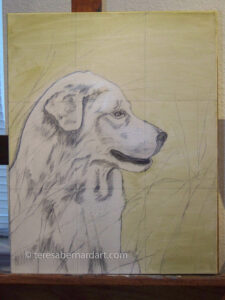
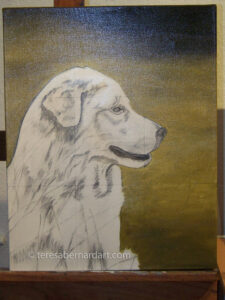
an underpainting is part of the oil painting process
The underpainting.

The underpainting plays an important role in my painting process. It forms the first layer of paint — the subtle foundation that supports every layer to come. I use this stage to block in color, establish tone, and remove the starkness of the white canvas. The layer is kept thin, so the sketch remains visible as I build the painting. This quiet beginning shapes the mood of the work and ensures that later layers have something solid to rest upon, adding depth and tonal harmony that enrich the painting’s character.

Painting in Layers
oil painting process -- painting in layers
Layering on the oil paint.

Layering is a key part of my oil painting process. I apply paint gradually, allowing each layer to dry before adding the next. This technique builds texture, detail, and dimension. It lets me refine the composition and add nuances that gradually reveal the painting’s story. Some paintings demand more layers than others, depending on the complexity of the composition. The layered surface offers richness that rewards close viewing, with subtleties emerging long after the first glance.

Applying Varnish

Varnishing is the final step in my oil painting process. Once the painting has dried thoroughly, I apply a clear, artist‑grade varnish. This protects the surface from dust and UV light while enhancing the colors, making them more luminous. The varnish safeguards the painting and ensures it is ready to shine in its new home.

The Completed Work
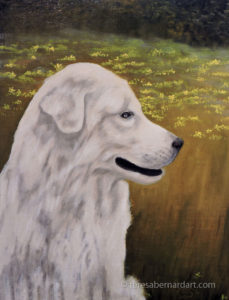
large white dog pet portrait
The finished painting.

The finished painting reflects every stage of the oil painting process—from canvas prep to final varnish. Each step is part of a rhythm that transforms a blank canvas into a lasting work of art.

The Large White Dog
A domestic pet painting by Teresa Bernard.
16″ w x 20″ h
Oils on gallery-wrapped canvas

Read more about this painting here.


Art Gallery Quick Links

Animals     |     Flowers     |     Landscapes     |     Marine

People     |     Space Art     |     Still Life

Additional Reading

The Types of Oil Painting Canvas in My Studio

Grid Enlarging in My Creative Process

The Importance of Varnishing Oil Paintings

Thanks for reading this!

Feel free to share this with your friends.


Grid Enlarging in My Creative Process

Precision through grid enlarging, artistry through vision.

Grid enlarging technique in painting for accuracy, proportion, and creative freedom.

Artists through the ages have often relied on various tools and techniques to move an image from idea to canvas. One of those methods is grid enlarging, widely practiced in studios across the globe. Renaissance masters such as Leonardo da Vinci and Albrecht Dürer used grids and proportional systems to construct their art. Today, grid enlarging remains one of the most dependable ways to expand a smaller image onto a larger canvas with accuracy and proportion.

What Grid Enlarging Means to Me

The grid enlarging method is one of the tools in my artist’s toolbox. It supports my artistry by preserving proportion and providing a framework, without ever replacing the creative act itself. Like an art projector or tracing overlay, the grid is simply another way to transfer an image. What matters is not the tool itself, but how the artist uses it.

Using a grid isn’t the heart of my art, but it plays a role in how I move an image from a smaller format to a larger canvas while keeping its proportions intact. Like any tool, it strengthens the work without diminishing the artistry. The grid gives me accuracy, but the art comes from how I change what I see once the structure is in place.

Why I Use Grid Enlarging

Accuracy, precision, and detail matter most in certain subjects. Portraits of people or pets, architectural scenes, or recognizable places with strong geometry all demand proportion before atmosphere can take over. The grid enlarging method gives me that foundation. It ensures that the larger canvas begins with integrity, so I can then focus on editing and shaping the composition once I put brush to canvas.

Without this tool, scale can easily distort. A face may lengthen, a building may lean, or a horizon may drift. The grid keeps those errors in check. Once the proportions are secure, I begin to make choices: compressing space, shifting edges, or removing distractions until the painting feels alive. The tool provides accuracy, but it is my judgment that transforms accuracy into art.

Beyond Mechanics

Although the grid is practical, it becomes part of my creative process because of how I approach it. I don’t copy every square mechanically. Instead, I let the grid slow me down, forcing me to notice what matters. It trains my eye to see angles and intervals more clearly, and it reminds me to look at what is truly there rather than what I think should be there.

This is where the grid becomes more than a tool — it becomes a discipline. It teaches patience, observation, and restraint. By focusing on one section at a time, I learn to see details in context, not in isolation. Yet I never stop at the grid. Atmosphere, rhythm, and recognition guide the painting forward. The tool sets the stage, but my artistry carries the performance.

When I Choose It

I don’t rely on grid enlarging for every painting. Some works ask for freedom, gesture, and improvisation rather than precision. Others demand exactness to protect the subject’s voice. Knowing when to use the grid — and when to leave it aside — is part of the discipline of being a fine artist.

It is not a replacement for drawing skills, but an aide. My ability to draw remains essential; the grid simply supports accuracy when scale and proportion matter most. In fact, using the grid often sharpens my drawing, because it forces me to confront what is actually there instead of what I assume. The tool helps me see, but it does not do the seeing for me.

The Grid as Tool, Not a Crutch

For me, grid enlarging is never about replacing skill. It is a tool of recognition, a way to carry proportion forward before reshaping it into something more expressive. Once the artistry takes hold, the grid fades away, leaving only the dialogue between idea and canvas.

The finished painting is not a mechanical transfer of squares; it is the result of choices, edits, and interpretations that transform the original image into art. The grid enlarging method is simply another tool — one I use because it helps me honor proportion while still protecting the mystery of the work.

Art Gallery Quick Links

Animals     |     Flowers     |     Landscapes     |     Marine

People     |     Space Art     |     Still Life

Additional Reading

Using a Viewfinder to Capture the Essence of My Art

The Importance of Varnishing Oil Paintings

Artist Blog Index: My Writings on the World of Fine Art

Thanks for reading this!

Feel free to share this with your friends.